
IT Outsourcing Breaks Down Without Clear Ownership and SLAs
IT outsourcing gives the ability to lower costs, access a wider pool of expertise, improve business agility, and provide increased capacity. However, effective IT outsourcing risk management is essential because many times the anticipated benefits do not materialize as expected due to breakdowns occurring in the outsourcing relationship. These breakdowns cause issues such as projects taking longer to complete than scheduled, the quality of the service delivered deteriorating, and an absence of accountability.
Most breakdowns associated with outsourcing fall into the category of broader IT Outsourcing Risks and challenges. The underlying reason for the failure of many of these outsourcing arrangements is the governance gap, the absence of clearly defined ownership structures and well-defined and constructed Service Level Agreements (SLAs).
Let’s explore what causes IT Outsourcing to break down when ownership and SLAs are not clearly defined and what the business risks associated with the breakdown are. Furthermore, we will explore the appropriate governance processes to promote long-term success.

Outsourcing is typically viewed as being primarily related to the procurement function with governance. Organizations take into consideration price, vendor capabilities, and how the contract will be negotiated. While many organizations fail to focus on creating accountability structures necessary for successfully managing IT outsourcing, this increases the risk of outsourcing IT far beyond what leadership expects.
Many of the common symptoms associated with failed engagements include:
- Poorly defined authority to make decisions.
- No clear definition of which responsibilities lie with either the client or the vendor.
- No defined escalation path or ignored escalation path.
- Performance management is reactive rather than proactive.
When responsibilities and authority are poorly defined, work may get done, but results will generally be poor because both the client and vendor assume the other party is fulfilling its responsibilities. Many times, critical issues fall within the gray area of responsibility. Stakeholders will want to invest (commit resources) to strategic initiatives, but will have difficulties doing so because of the lack of defined responsibilities.
Redistributing responsibilities without clear ownership creates fragmentation, not efficiency, which also leads to additional IT outsourcing challenges.
Ownership makes IT clear, not just who is responsible, but who is accountable for the final outcome. Responsibility can be shared, but accountability cannot.
Effective ownership models in outsourced environments commonly include:


Every service and function should have a designated business owner on the client side and an assigned service delivery owner on the vendor side.
Who is responsible for approving changes to the architecture? Who is responsible for signing off on any change in the scope of work? Who allocates time in the project backlog? These items will be documented and mutually agreed upon.

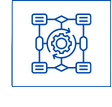
RACI (Responsible, Accountable, Consulted, Informed) matrix clarifies who is doing the work versus who needs to be notified or consulted, thereby lessening the likelihood of duplication of effort.
Clearly defined thresholds for operational, tactical, and executive-level issues prevent small problems from escalating into a major disaster.

Without these structures, IT outsourcing can become more of a transactional activity rather than a true strategic partnership. It happens notably in environments that are dependent upon outsourced managed IT services that have specific areas of accountability.
Despite the presence of a service level agreement (SLA), the agreement may fail to deliver the expected outcomes for businesses. There are numerous reasons why this happens.


The majority of SLAs measure operational metrics such as average speed to respond to an incident ticket. It helps businesses understand if their vendors are meeting their defined SLAs. These metrics do not adequately measure whether or not they had a negative impact on your business.
For the SLA to have any value, the technical and operational performance metrics will need to tie back to the business outcomes that the IT function is responsible for (especially when designing an outsourced IT SLA that covers mission-critical services).
Ambiguous definitions will create issues between the vendor and the customer (e.g., the absence of a clear system availability definition, whether there are maintenance windows, and how a partial outage is measured). The lack of a clear, precise, and consistent definition of an SLA metric will make the SLA negotiable (able to be negotiated) and not enforceable.

SLAs must include service credits, penalty provisions, or defined corrective actions in order for the SLA to be enforceable. If the SLA does not contain a consequence structure, such as the aforementioned, the vendor is less likely to strive for excellence and will perform at a minimal level.
Business needs continually change, while the vast majority of SLAs remain static (I.e., unchanged). If the SLA performance measures are not reviewed and adjusted on a periodic basis, it is very likely that the performance metrics will move away from the strategic objectives of the business or entity that has the SLA.
The SLA should not only be treated as an addendum to the contract, but also as a performance management tool. When designed poorly, it creates friction rather than accountability, heightening the risk of outsourcing IT services across operational and strategic dimensions.


The absence of governance clarity leads to measurable business risks:
- Cost overruns resulting from disputed scopes of work
- Lengthy periods of downtime due to delayed accountability
- Vendor churn and re-transitional costs
- Reduced ability to innovate due to a defensive approach to service management
- Damage to your company’s reputation through repeated service failures
More critically, important initiatives will fail. Digital transformation efforts will not succeed if teams that have been outsourced lack direction about what is expected of them. Security risks will stay unresolved when accountability is spread out over a multitude of parties, increasing the overall IT outsourcing risk that leadership may have originally overlooked.
Eventually, leaders start to question whether they should continue to use the outsourcing model, including why outsourcing IT support in the first place. It happens even though the problem is not with the outsourcing model as a strategy; instead, it is with how it is governed.
Outsourcing should be viewed as a managed ecosystem with clear accountability and performance frameworks. Disciplined IT outsourcing risk management practices should also be used to avert failure.


Operational, tactical, and executive governance forums must be in place at all levels of the engagement to provide alignment to all levels of the relationship.
Ownership should include the entire life cycle of the service, as well as the associated risk management and ongoing performance statistics, within structured outsourced IT management environments.


Business-relevant metrics will be reflected in SLA agreements, including uptime for revenue-generating systems, recovery time objectives, security compliance, and end-user satisfaction.
Performance measurements, risks, and improvement efforts must be publicly visible on a dashboard view. The establishment of a foundation of transparency creates a climate of trust and reduces the potential for dispute.

Quarterly SLA reviews, root cause analysis, and joint innovation roadmaps ensure that the relationship keeps evolving according to business needs.
| Question | Yes | No |
| Does every outsourced service have a named business owner on the client side? | ☐ | ☐ |
| Is there a documented RACI matrix covering all major services? | ☐ | ☐ |
| Are escalation thresholds defined with time-bound response expectations? | ☐ | ☐ |
| Do SLAs tie at least 50% of metrics to business outcomes (not just activity)? | ☐ | ☐ |
| Are SLA metrics reviewed and adjusted at least quarterly? | ☐ | ☐ |
| Are financial consequences clearly defined for missed SLA targets? | ☐ | ☐ |
| Is performance reporting transparent and visible to both executive teams? | ☐ | ☐ |
If you answered “Yes” to 6 or more questions, your governance structure is likely well-defined and aligned with business outcomes. If you marked 3–5 “Yes” responses, governance gaps are present and may already be impacting performance. If you marked 0–2 “Yes” responses, there is a high risk of accountability breakdown, SLA misalignment, and escalating outsourcing failure.

SilverXis assists businesses in creating outsourcing models that remove uncertainty before IT leads to operational failure. By creating well-defined ownership structures, enforceable SLA structures, and disciplined IT outsourcing risk management practices, we ensure that accountability is part of the engagement.
Our approach comprises:
- Governance model design supporting business strategy
- SLA architecture linked to business-critical outputs
- Risk evaluation and mitigation planning for outsourced environments
- Regular performance management and enhancement monitoring
Whether companies are establishing new outsourcing arrangements or reorganizing existing arrangements, SilverXis ensures that accountability is incorporated into the core of each engagement.
SilverXis delivers an environment to organizations where outsourcing changes from a contractual agreement to an established, structured accountability ecosystem, enabling them to achieve resiliency, transparency, and measurable return on investment (ROI).
Many people mistakenly believe that IT outsourcing fails due to vendors not being able to provide service. In fact, the real reason for outsourcing failure is typically a lack of clarity as well as definition around governance.
Accountability is established by clear ownership structures, and measurable expectations are documented in strong SLAs. They build the foundation of successful outsourcing partnerships.
Organizations that build their governance architecture (rather than simply relying on contractual arrangements) experience stronger performance, strengthened resilience, and better return on investment (ROI).
Outsourcing today is centered on creating a structured accountability framework that provides for performance, transparency, and long-term strategic value.
Without well-defined ownership and documented measurable expectations (through clearly stated SLAs), even the best vendors cannot deliver. When IT outsourcing risk management fails, the entire arrangement ultimately collapses.
Looking to strengthen your IT outsourcing governance? Get in touch with SilverXis today.
References
- Governance of Outsourcing Projects
https://link.springer.com/chapter/10.1007/978-3-031-12034-3_9 - Service Level Agreement in Cloud Computing: Taxonomy, Prospects, and Challenges — ScienceDirect
https://www.sciencedirect.com/science/article/pii/S2542660524000684 - Structure of Service Level Agreements (SLA) in IT Outsourcing — AMCIS Proceedings (2006)
http://aisel.aisnet.org/amcis2006/391 - Information Technology Outsourcing Chain: Literature Review and Implications — Sustainability (MDPI)
https://www.mdpi.com/2071-1050/11/5/1460