

Mobile app development is driving business growth everywhere, B2B, B2C, you name it. Picking the right app development platform, whether building for enterprise clients or regular consumers, shapes how the brand grows over time. So what are the top companies doing? They are doubling down on iOS and Android, using cross platform development tools, delivering great mobile UX design, and keeping mobile security locked down tight. That is how they are reaching tens of millions of users as we head into 2025.
The Mobile Revolution: Why 70% of User Engagement Is Now Mobile-First
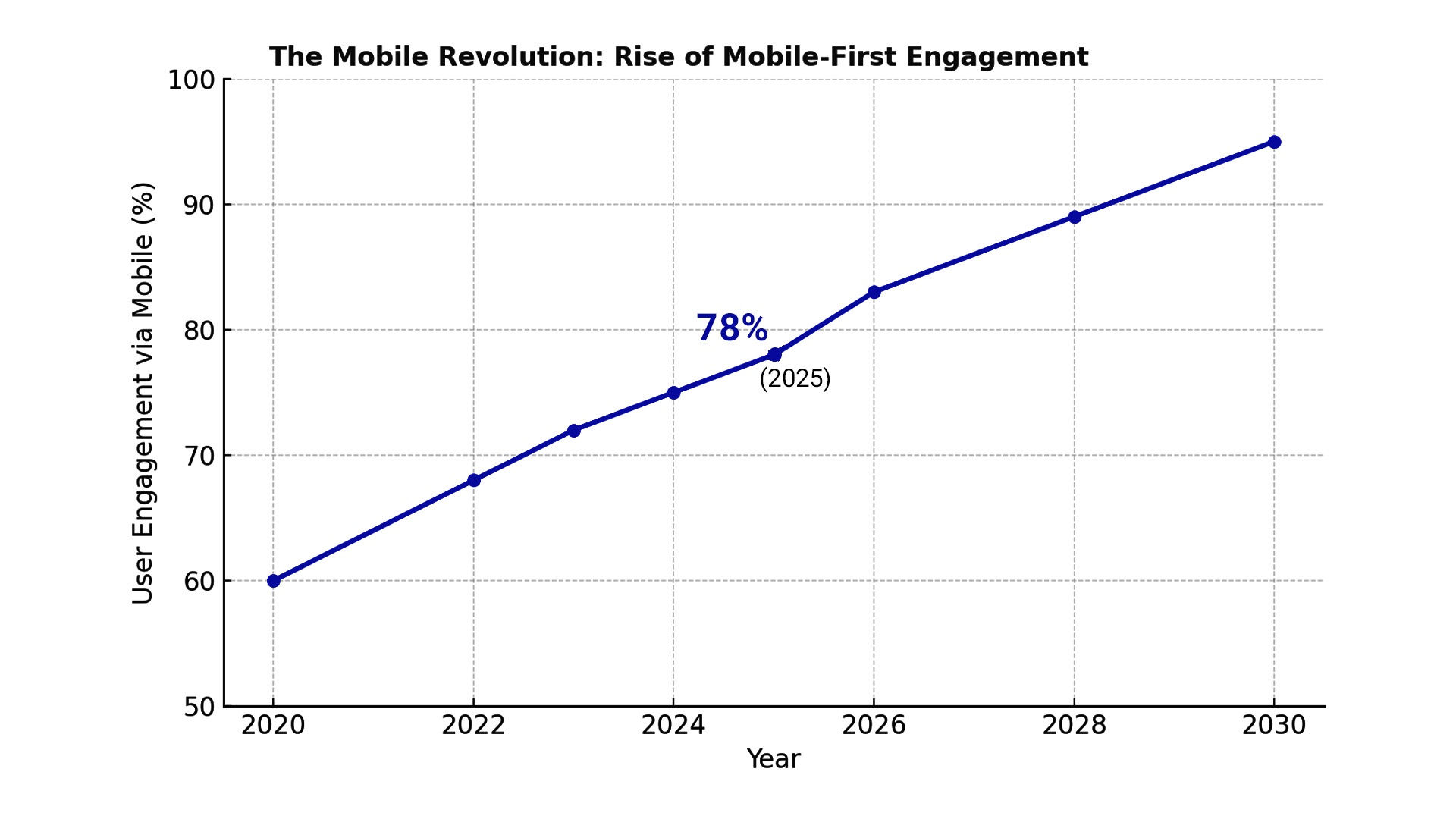
According to DataReportal, users no longer just visit websites, they live inside mobile apps. In 2025, more than 5.78 billion people around the world use a mobile phone, representing about 70.5% of the global population. User behaviour has changed significantly, with most smartphone time now spent inside apps rather than browsers. The rest of their time is devoted to dedicated mobile apps, highlighting how mobile app experiences now dominate the way people connect, communicate, and engage online.
Mobile first is no longer just about responsive web design. It is about creating full fledged app experiences with strong mobile UX design, smart push notifications, and reliable offline performance that work even when the signal is weak.
Native vs Cross-Platform vs PWA: Choosing the Right Approach
When Native iOS/Android Makes Sense
If you need the absolute best native performance, such as banking apps or top tier games, native is still the way to go. Building directly for iOS or Android through dedicated iOS app development services and Android app development services gives full control over device hardware, smooth user experiences, and deeper integrations. That is why many companies with high standards stick with native mobile app development. But here is the catch, you will end up managing two codebases, which means higher costs and more work to maintain.
React Native and Flutter: The Cross-Platform Leaders
If speed and reach matter most, cross platform development tools like React Native development and Flutter app development are hard to beat. One app development platform covers both iOS and Android, so updates and testing are faster and you save on resources. Many companies serving both businesses and regular users choose this path as part of their mobile app development approach because it makes things simpler, especially when you need to move fast.
Progressive Web Apps: The Budget-Friendly Option
Tight on cash or just want to test the flow? A progressive web app (PWA) can mimic app experiences right in the browser. You will not get all the bells and whistles of native apps since offline features and hardware access are limited, but you do get broad reach and a cheaper build. A PWA serves as an effective app development platform for MVPs or early market tests when you want to learn before spending big.
7 Essential Features Every High-Growth Mobile App Needs
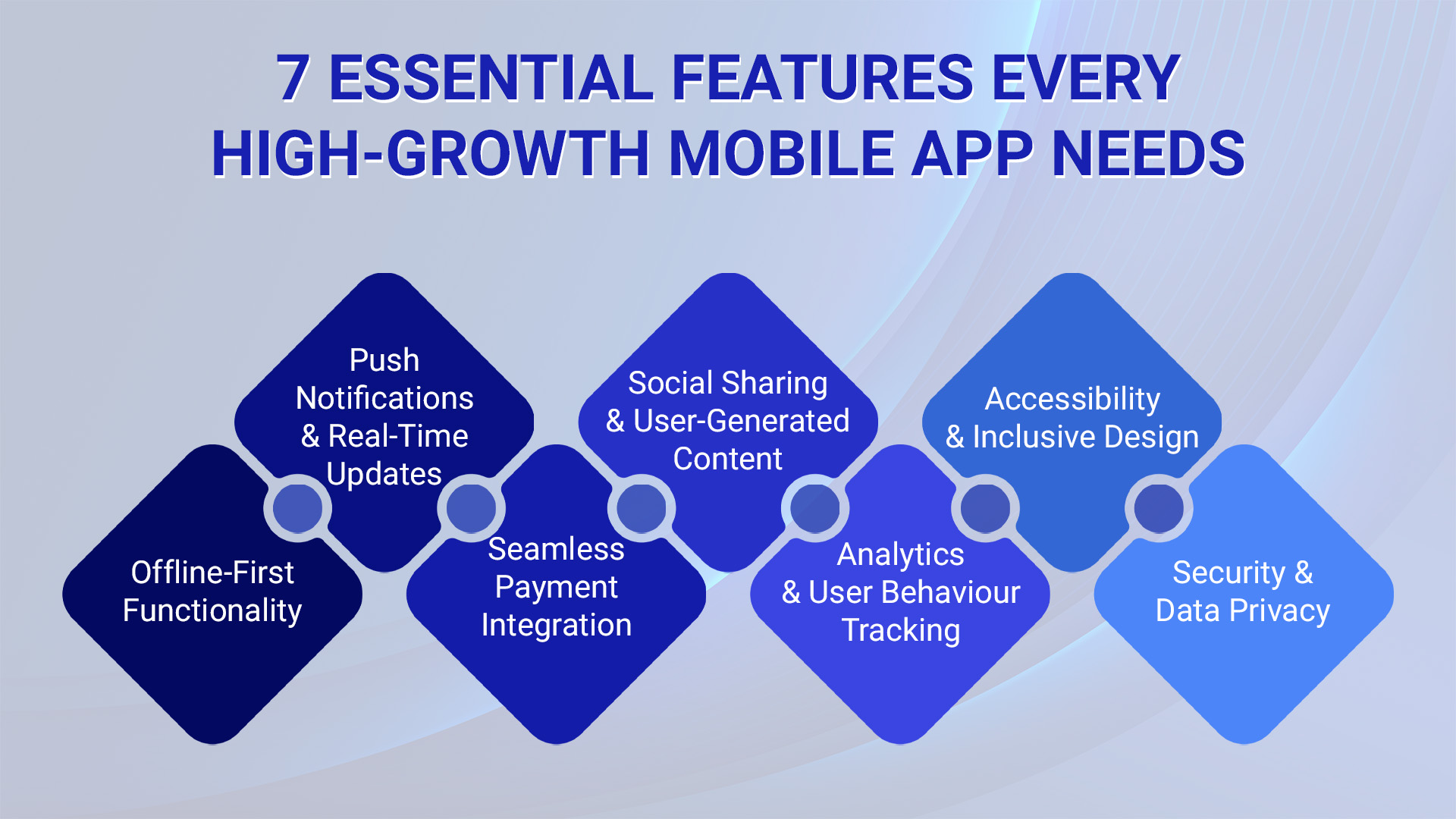
Offline-First Functionality
To reach everyone, an app needs to work even with spotty internet. That means building in offline functionality such as local caching, sync queues, or background downloads. People expect apps to work anywhere, and if they do not, they leave. Strong mobile UX design ensures the experience stays seamless even when the connection is weak.
Push Notifications and Real-Time Updates
Real engagement comes from timely and relevant push notifications and live updates—messaging, news feeds, whatever keeps people coming back. Smart API integration is key here, so you can trigger personalized experiences at the right time. This keeps users connected and encourages repeat engagement.
Seamless Payment Integration
If the goal is to make money, whether from consumers or businesses, payments need to be smooth. Choosing an app development platform with reliable payment SDKs and compliance with store regulations ensures quick transactions. The easier it is for people to pay, the faster revenue grows.
Social Sharing and User-Generated Content
Social sharing is not just a nice addition, it is a growth driver. Making it easy for people to share, invite others, and create their own content directly supports mobile app development goals. Consumer apps thrive on this, and even B2B platforms benefit through collaboration and shared insights.
Analytics and User Behaviour Tracking
Start tracking analytics from day one. It is important to understand how long users stay, how often they return, and where they drop off. These insights guide design and mobile UX design decisions, helping both business dashboards and consumer experiences improve. Strong analytics also strengthen app store optimization by improving visibility and downloads.
Accessibility and Inclusive Design
Design with everyone in mind. When an app supports voice control, larger text, or easy navigation, it shows thoughtful mobile UX design that welcomes more users. These features expand access, improve quality, and demonstrate commitment to inclusivity for both enterprise clients and everyday users.
Security and Data Privacy
Security is never optional. Even when companies believe their apps are safe, breaches still happen. To ensure proper protection in mobile app development, build with encryption, manage tokens carefully, monitor for threats, and control permissions from the start. These steps protect both enterprise and consumer applications from serious risks.
Mobile App Development Process: From Idea to App Store Launch
Discovery and Strategy Phase
When starting out, get clear on goals, target audience, and market conditions. Decide whether to use iOS app development services, Android app development services, or even a cross platform route. Choosing the right app development platform affects everything that follows—cost, timing, and overall outcome.
Design and Prototyping
Put real effort into mobile UX design early. Create wireframes, build prototypes, and gather feedback. Test features such as offline mode and real time updates to make sure the user flow fits both business clients and everyday consumers.
Development and Testing
As development begins, technical choices come to life. Cross platform development frameworks like React Native development and Flutter app development help share code efficiently across systems. However, testing remains crucial—covering devices, API integration, permissions, performance, and security to ensure a stable experience.
Launch and Post-Launch Optimization
Once launched, focus on app store optimization by improving the description, visuals, and keywords, and keeping updates consistent. Track metrics closely, add features like offline support and push notifications, and strengthen mobile security to maintain user trust. Regular improvements keep the app competitive.
Global Mobile App Success Stories Across Industries
Healthcare: Telemedicine App Serving 10M Patients
Healthcare apps are transforming accessibility. One provider used cross platform development with robust mobile security, smart API integration, and intuitive mobile UX design to reach more than ten million patients. Their mobile app development model enabled secure teleconsultations and reliable offline symptom tracking.
Fintech: Payment App Processing $500M Annually
In fintech, one startup used a strong app development platform with native modules and a progressive web app fallback to process $500 million in annual transactions. Integrated push notifications provided real time alerts, while careful app store optimization helped expand globally.
E-commerce: Mobile-Only Platform Generating $100M Revenue
E-commerce companies are adopting cross platform development for faster delivery. One brand used Flutter to create a unified app with offline catalog access, social sharing, and seamless in app payments. The result—$100 million in revenue driven by powerful mobile app development.
Social: Community App with 50M Monthly Active Users
A community platform reached over fifty million users by focusing on mobile app development from the beginning. Built using React Native development, it featured real time chat, offline sync, and social referrals that encouraged growth in both business and consumer segments.
Cost Breakdown: What Enterprises Should Budget for Mobile Apps
MVP Development Timeline and Cost
For a minimum viable product, cross platform development using React or Flutter usually costs between $50,000 and $150,000. Pricing varies by features such as offline support, push notifications, and API integration. This method delivers a quicker launch while keeping budgets efficient.
Full-Featured App Development Timeline and Cost
For full scale native builds, including both iOS app development services and Android app development services, costs often range between $200,000 and $500,000. The added complexity brings stronger performance, advanced analytics, premium design, and solid security.
Hidden Costs: Hosting, Maintenance, and Updates
After launch, costs continue through hosting, push notification services, analytics, compliance, and mobile security maintenance. These can total 15–20 percent of the initial investment each year. Selecting the right app development platform can help control costs and support long term scalability.
Mobile Security Best Practices for Enterprise Apps
As mobile apps become core business tools, mobile security must be built in from the start. Use biometrics or MFA for authentication, encrypt data, track threats, and manage versions responsibly. Many organizations still face breaches despite confidence in safety. Embedding protection early within mobile app development builds user trust and enterprise credibility.
Measuring Mobile App Success: KPIs and Analytics
Launching the app is only the beginning. Real success depends on tracking data such as acquisition cost, retention, lifetime value, and churn. These insights connect directly with mobile UX design, offline features, and push notifications. Smart analytics power updates that improve performance and user engagement, driving ongoing growth through effective mobile app development.
Choosing Your Mobile App Development Partner
Selecting a mobile app development partner is a major strategic decision. Seek teams that deliver both iOS app development services and Android app development services, with proven expertise in cross platform development using React Native development or Flutter app development. Strong mobile UX design, app store optimization, and mobile security experience are vital. The right partner aligns with both enterprise and consumer goals to drive faster launches and lasting value.
Conclusion
Reaching fifty million users in 2025 takes more than strong code—it requires smart planning. Success depends on effective mobile app development, reliable cross platform development, or even a progressive web app (PWA) approach. Selecting the right app development platform, focusing on mobile UX design, integrating analytics, and prioritizing security creates scalable digital experiences that truly connect and endure.
Turn your app idea into a market-leading mobile solution. Schedule a free mobile strategy consultation.
FAQs
What’s the difference between native and cross-platform mobile app development?
Native apps are developed separately for iOS and Android to ensure full access to device features and peak performance. Cross-platform development uses frameworks like React Native development or Flutter app development to share code across systems, helping reduce cost and accelerate time to market.
How do I pick the right app development platform for my business?
Think about your audience — are they on iPhones, Androids, or both? Do you need features like AR or special sensors? Take a hard look at your budget, your timeline, and how much you can spend on future updates. If you want to reach a lot of people without breaking the bank, go cross-platform. If you want every ounce of performance and don’t mind the extra cost, native’s the way to go.
Why does mobile UX design matter so much for app success?
Effective mobile UX design keeps users engaged and improves retention. Apps that feel intuitive, responsive, and seamless build stronger connections, while poor design quickly drives users away.
What does it usually cost to build a mobile app?
It really depends on what you’re building. A basic MVP using cross-platform tech can start around USD $50,000 to $150,000. If you’re aiming for a full-featured native app with enterprise bells and whistles, expect to pay over USD $200,000.
How do I keep my mobile app secure and ready for the future?
Strong mobile security begins at the foundation—using encryption, secure APIs, permission audits, and continuous monitoring. Building protection into every stage ensures long-term reliability and trust for both enterprises and consumers.
